


9 Signs Your Boiler Needs Replacing (Before It Breaks Down Completely)
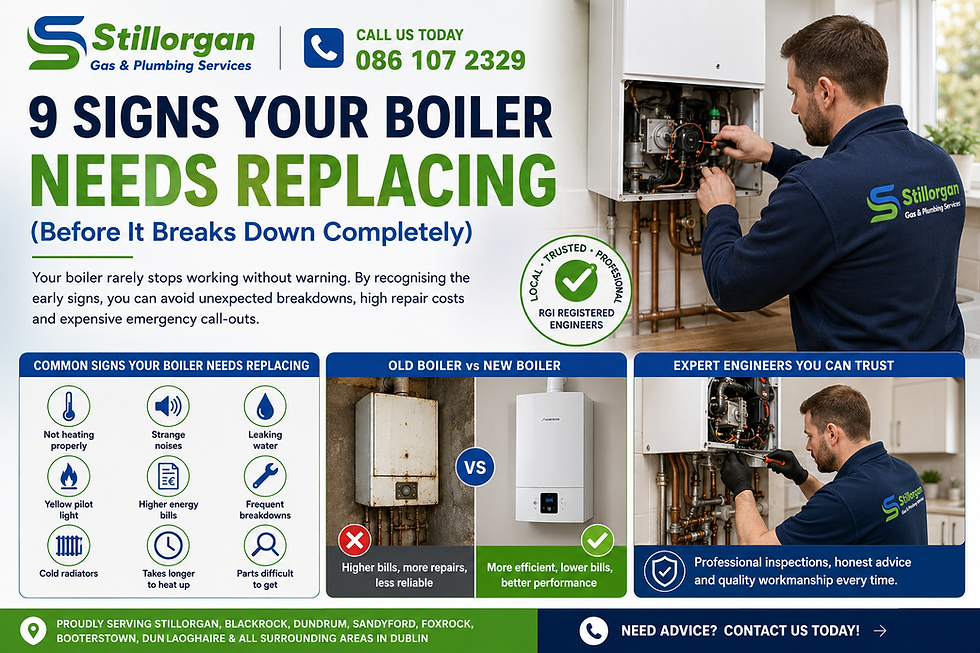
If your boiler has started making strange noises, your heating bills are rising, or you're constantly calling for repairs, it may be trying to tell you something. Most boilers don't fail without warning—they usually show clear signs that they're nearing the end of their lifespan.
Recognising these warning signs early can help you avoid an unexpected breakdown, expensive emergency repairs, and the inconvenience of losing heating or hot water when you need it most. If you're considering a boiler replacement in Dublin, this guide explains the most common signs your boiler may need replacing, when a repair is still worthwhile, and how to make the best long-term decision for your home.
How Do You Know If Your Boiler Needs Replacing?
Most gas boilers last between 10 and 15 years, depending on the model, usage, and how well they've been maintained. If your boiler regularly breaks down, struggles to heat your home, leaks water, or your energy bills continue to rise, replacing it is often more economical than paying for repeated repairs.
At Stillorgan Gas & Plumbing Services, we regularly inspect boilers across Dublin that homeowners believe only need a small repair. In many cases, the boiler has simply reached the end of its working life, making replacement the safer and more cost-effective solution.
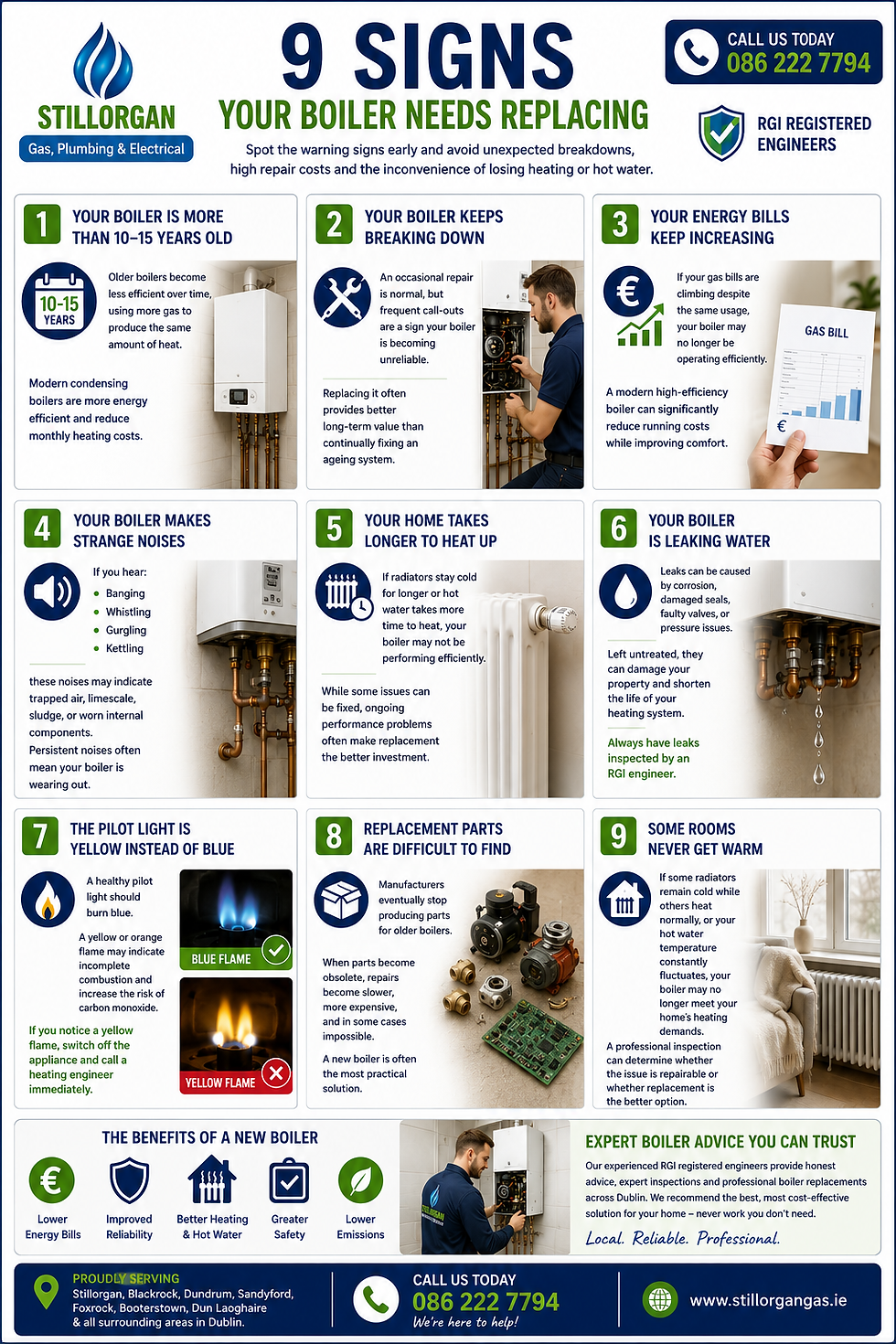
9 Signs Your Boiler Needs Replacing
Boiler Repair or Boiler Replacement?
Many homeowners ask whether they should repair their existing boiler or replace it completely.
Repair May Be Enough | Replacement May Be Better |
Minor fault | Boiler over 10–15 years old |
First major repair | Frequent breakdowns |
Parts readily available | Parts discontinued |
Boiler remains efficient | Rising energy bills |
Repair is cost-effective | Repairs becoming expensive |
A qualified heating engineer can assess your boiler and recommend the option that provides the best long-term value.
What Happens During a Boiler Replacement?
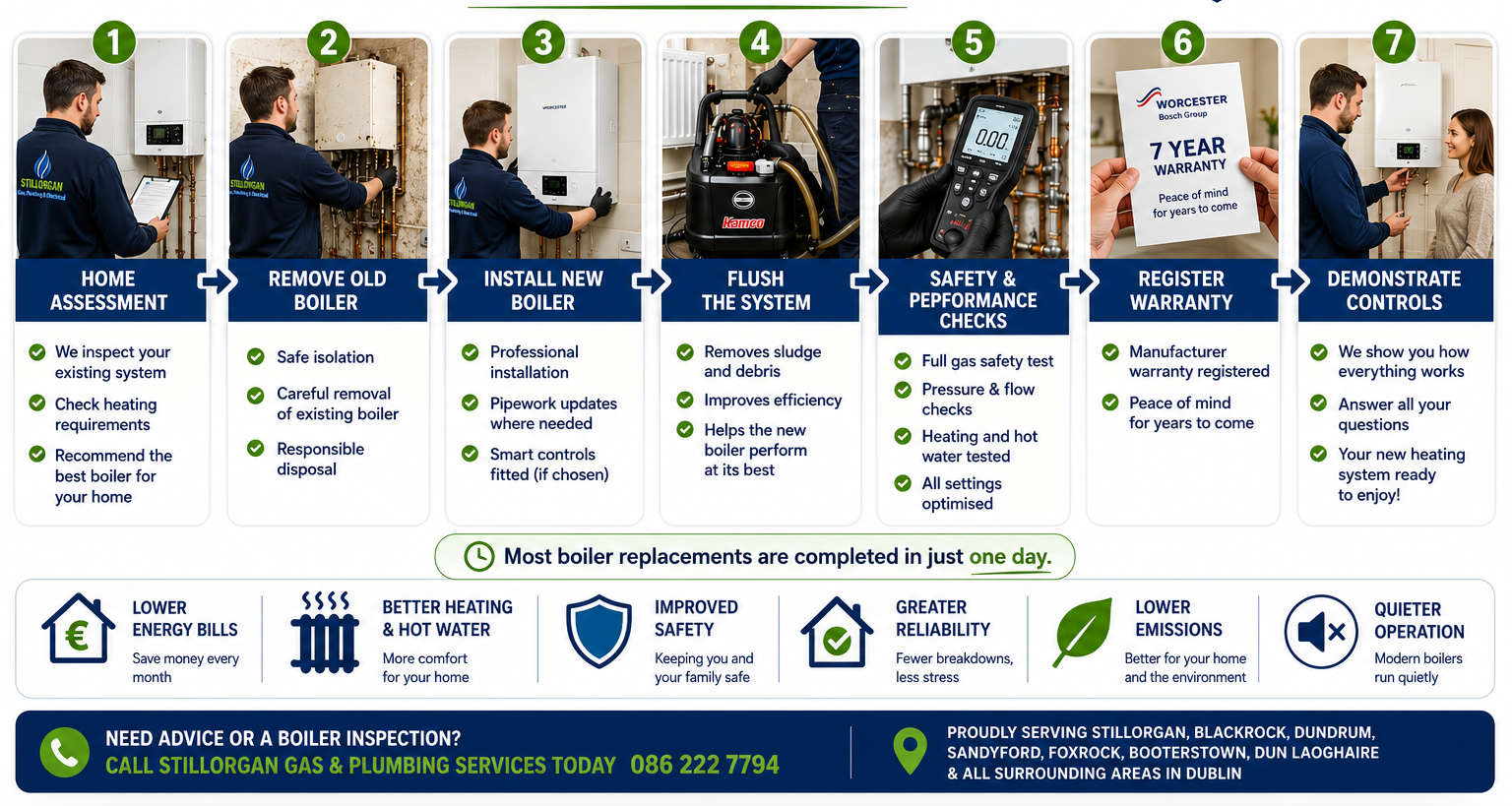
Most boiler replacements can be completed within a single day, depending on the installation.
The process usually includes:
Inspecting your existing heating system.
Removing the old boiler.
Installing the new high-efficiency boiler.
Flushing the system where required.
Carrying out gas safety and performance checks.
Registering the manufacturer's warranty.
Demonstrating the new controls before handover.
Replacing your boiler before winter can help avoid emergency breakdowns when your heating system is under the greatest demand.
Why Replacing Your Boiler Can Save You Money
Lower Energy Bills
Modern condensing boilers are designed to use less fuel while providing better heating performance, helping reduce your monthly energy costs.
More Reliable Heating
A new boiler delivers consistent heating and hot water throughout your home, reducing the risk of unexpected breakdowns.
Improved Safety
Replacing an ageing boiler reduces the likelihood of leaks, faults, and worn components affecting your heating system.
Greater Peace of Mind
A modern boiler means fewer repair bills, greater reliability, and manufacturer warranties that can provide many years of protection.
Why Choose Stillorgan Gas & Plumbing Services?
Our experienced RGI-registered heating engineers provide professional boiler servicing, repairs and replacements throughout Dublin.
We regularly install and service boilers in Stillorgan, Blackrock, Dundrum, Sandyford, Foxrock, Booterstown, Dun Laoghaire, South Dublin, and surrounding areas.
Whether you need honest advice, an emergency repair, or a complete boiler replacement, we'll recommend the most cost-effective solution for your home—never work you don't need.
Frequently Asked Questions
How long should a boiler last?
Most modern boilers last between 10 and 15 years when serviced annually.
Is it cheaper to repair or replace a boiler?
Minor faults are usually worth repairing. However, if your boiler is old, breaks down regularly, or requires expensive parts, replacement is often the more economical option.
Can an old boiler increase my energy bills?
Yes. As boilers age, they become less efficient and use more gas to produce the same amount of heat.
Is it worth replacing a 15-year-old boiler?
In many cases, yes. A modern boiler can improve efficiency, reliability, and reduce ongoing repair costs.
How long does a new boiler installation take?
Most standard boiler replacements can be completed within one working day.
Should I replace my boiler before winter?
Yes. Replacing your boiler before the colder months reduces the risk of losing heating during peak demand.
Do I need to replace my radiators as well?
Not always. Your heating engineer will assess your system and advise whether your existing radiators are suitable.
Can I replace just the boiler?
In many cases, yes. However, older heating systems may also benefit from upgrades such as heating controls or system flushing.
Final Thoughts
Your boiler is one of the most important appliances in your home, and recognising the warning signs early can save you from expensive repairs and unexpected breakdowns.
If your boiler is over 10–15 years old, requires frequent repairs, struggles to heat your home, or your energy bills continue to rise, replacing it may be the most cost-effective long-term solution.
At Stillorgan Gas & Plumbing Services, we provide professional boiler inspections, servicing, repairs, and installations across Dublin. Our experienced heating engineers will assess your existing system and provide honest advice on whether a repair or replacement offers the best value. We also have 6 fully qualified electricans and drain engineers to help out with anything electrical and drains.


Comments